
Resources, lived experience, and practical knowledge for long-term wellness
September is Spinal Cord Injury Awareness Month. While many people may be generally familiar with spinal cord injury, awareness is only the beginning. Deeper understanding comes from listening to lived experience and learning what health, participation, and everyday life can look like long after rehabilitation ends.
For almost 20 years, NeuAbility has served people living with spinal cord injury and other neurological conditions. Through adaptive exercise, integrative health services, and community continuity, we have seen what becomes possible when people have sustained access to knowledgeable practitioners, practical resources, shared experience, and a strong community.
Beyond Awareness: Life after Spinal Cord Injury
A Resource shaped by our community
In honor of Spinal Cord Injury Awareness Month, NeuAbility is creating an ongoing collection of resources, stories, practical tips, and useful strategies from our trainers, integrative health practitioners, community members, and partners.
These perspectives will offer an honest and expansive view of life with spinal cord injury. We will acknowledge real challenges while also exploring capacity, agency, participation, belonging, and the many ways people engage in the lives they want to live.
September … Continuing Year-Round
This resource begins during Spinal Cord Injury Awareness Month, but the need for trusted information, shared knowledge, and community does not end when September does.
New editions will be added regularly throughout the year. We invite you to check back often, follow NeuAbility on social media, and share these resources with others who may find them useful.
Awareness helps people recognize spinal cord injury. Understanding helps build stronger, more informed, and more connected communities.
Resource index
Long-Term Life and Health After SCI
Recreation After Paralysis
Stretching After SCI
Supported Standing After SCI
Cardiovascular Health After SCI
Protecting Your Joints and Shoulders After SCI
Nutrition After SCI
Whole-Person Support and Integrative Health
Traumatic SCI Facts and Statistics
Community Resources and Organizations
Awareness Resources
Sodium and Low Blood Pressure After Spinal Cord Injury
Could extra sodium help with low blood pressure after a spinal cord injury? It’s a question that deserves more than a simple yes or no.
In this educational resource from Neu4Nutrition and NeuAbility, Justin Batchelder, RDN, LDN, MS, explores sodium and blood pressure for people with higher-level spinal cord injuries. The article explains why sodium might help, what the research does and does not tell us, and why individual blood-pressure patterns, medications, and overall health matter.
Justin is a registered dietitian, founder of Neu4Nutrition, and a longtime NeuAbility client. He brings professional knowledge and lived experience to nutrition education that connects with the practical realities of life after injury.
Read the full article to learn more and prepare questions for your healthcare team. Before making significant changes to your sodium intake, talk with your doctor.
Download the PDF: Sodium & Low Blood Pressure
Protecting Your Joints After Spinal Cord Injury
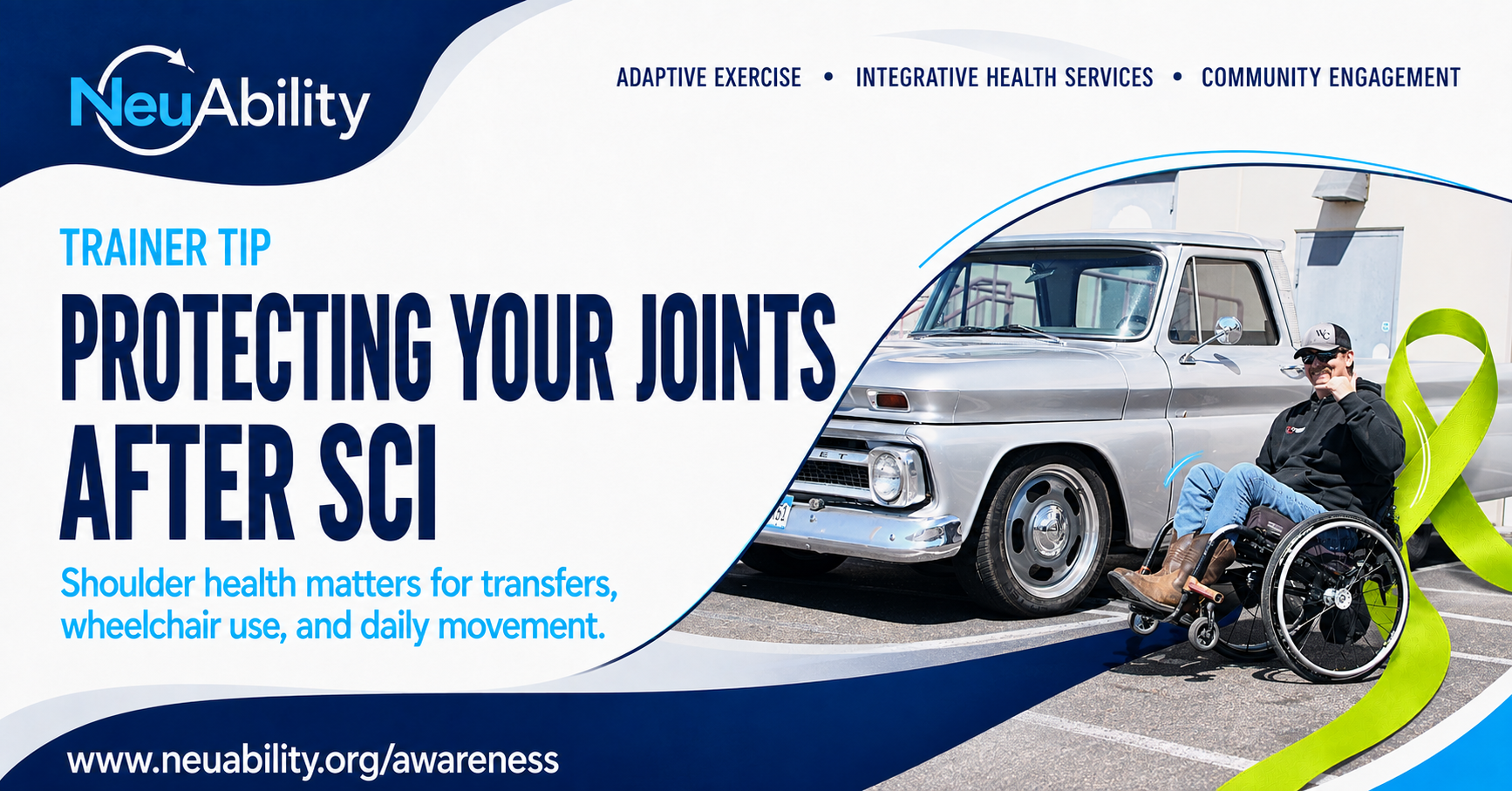
Your shoulders, elbows, and wrists may do a great deal of work after a spinal cord injury. For people who use a manual wheelchair, everyday activities such as pushing, transferring, reaching, and lifting can place repeated demands on the same joints. Caring for them is part of staying active over the long term.
Small changes can make daily movement easier on your body. A well-fitted wheelchair and efficient pushing technique can reduce unnecessary strain. During transfers, positioning the chair close to the destination and using a technique suited to your body can help protect your arms. A transfer board, lift, or other equipment may also be useful.
Strength and flexibility matter, too. An exercise plan tailored to your abilities can help support the muscles around your shoulders and maintain comfortable movement. The right plan depends on your injury, mobility, current strength, and any pain you are experiencing.
If a movement has become painful or harder than it used to be, bring it up with a physical or occupational therapist. They can review your wheelchair setup, transfer technique, and exercise routine with you. Protecting your joints is an ongoing practice that can support the activities you want to keep doing.
Traumatic Spinal Cord Injury:
Facts and Statistics
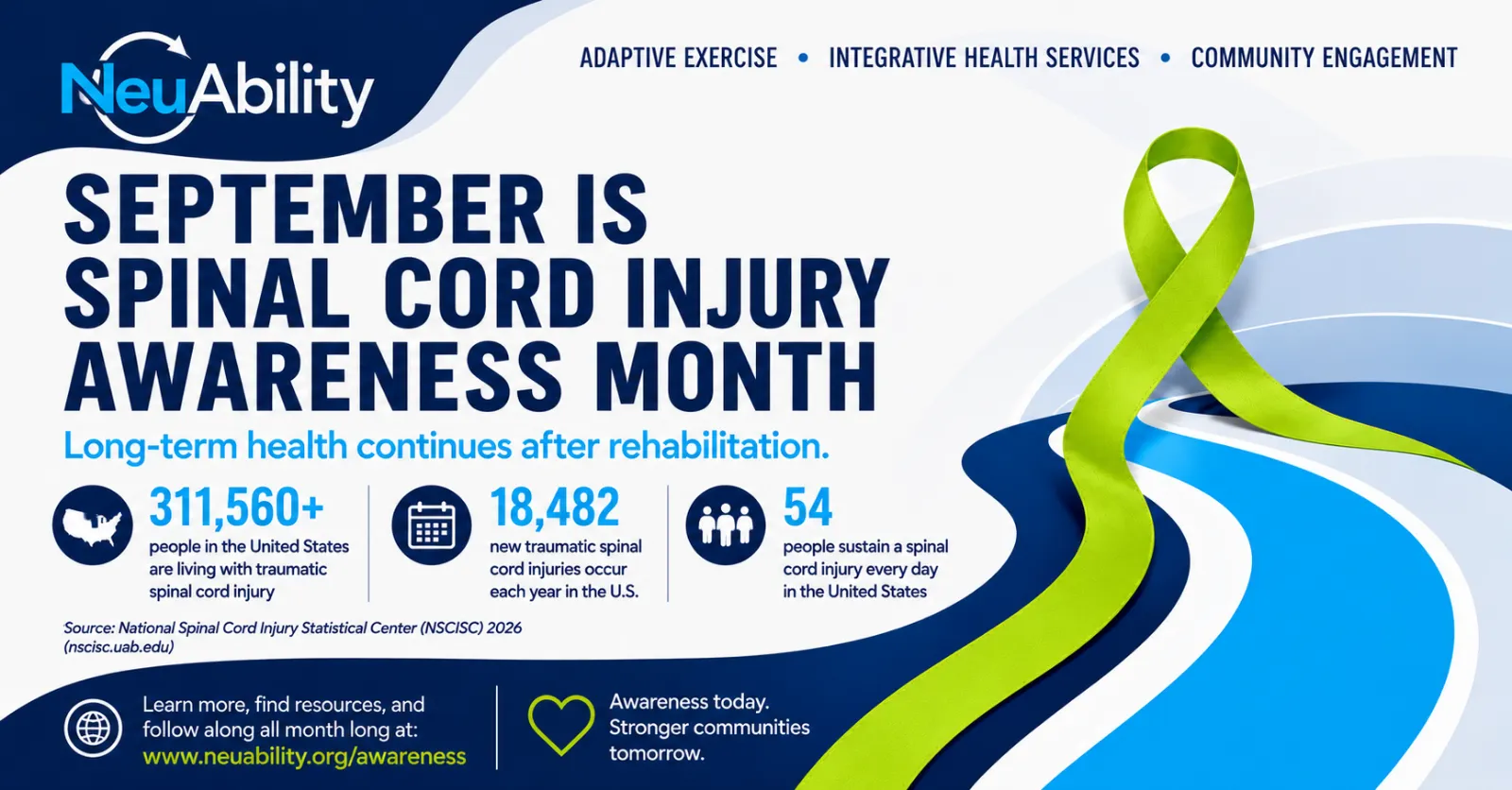
Spinal Cord Injury Awareness Month is an opportunity to understand how many people are affected by traumatic spinal cord injury (SCI) and to recognize that life after injury continues well beyond initial treatment and rehabilitation.
In the United States, an estimated 18,482 people experience a new traumatic SCI each year. Approximately 311,560 people are living with a traumatic SCI. These are estimates, and the annual figure does not include people who die at the location of the incident.
The average age at injury has changed over time. Among people injured since 2015, it is 44.3 years. Vehicle crashes and falls are the two most common reported causes in that period, accounting for 37.1% and 32.5% of injuries, respectively.
These figures describe traumatic spinal cord injuries. They do not represent every condition that can affect the spinal cord. They also cannot describe any one person’s abilities, goals, or experience. Alongside awareness of the injury itself, NeuAbility encourages attention to the exercise, health services, recreation, and community connections that can matter throughout life after SCI.
Source: National Spinal Cord Injury Statistical Center, 2026 SCI Data Sheet.
Supported Standing After SCI
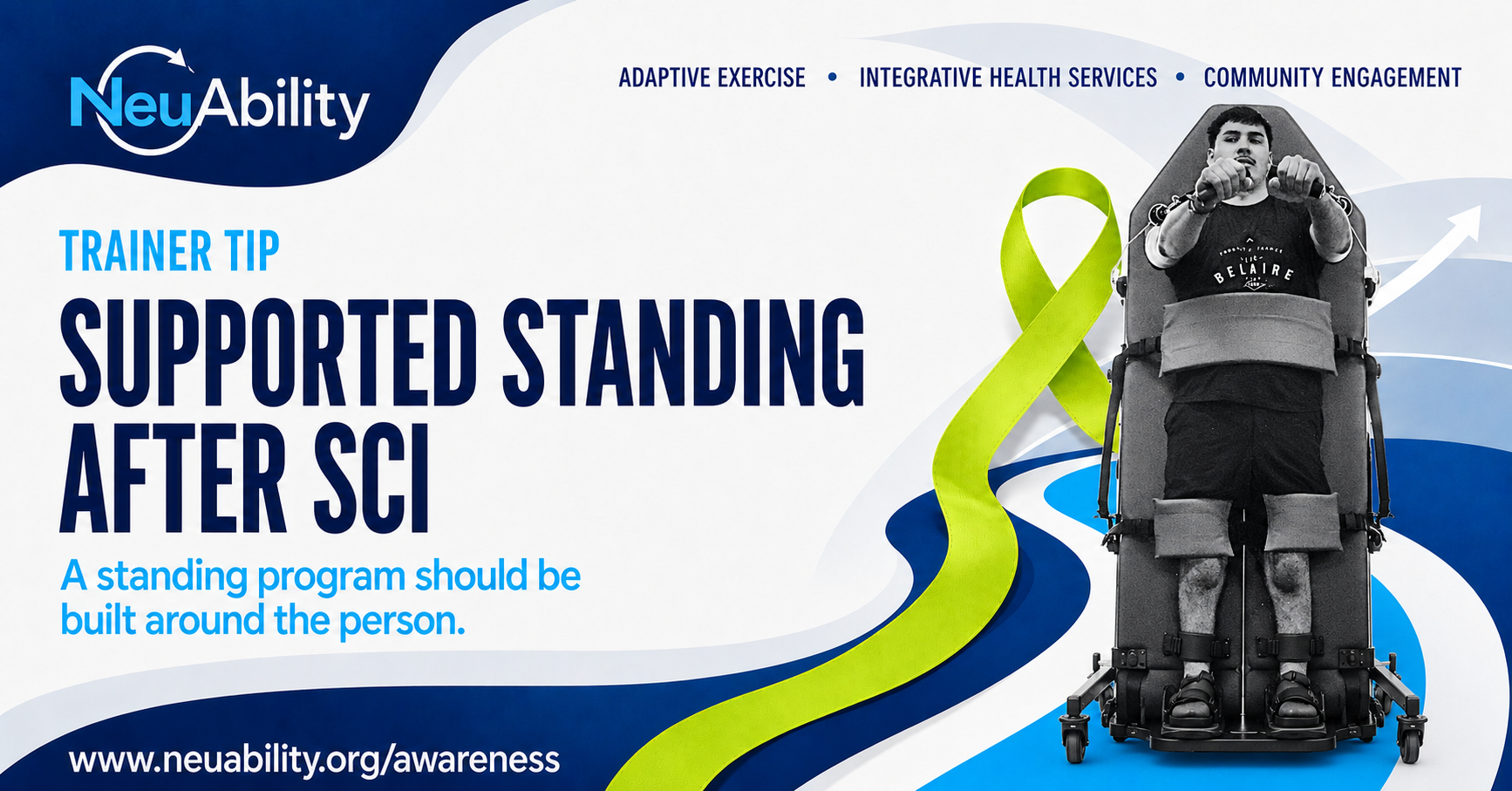
Standing after a spinal cord injury can look different for every person. At NeuAbility, trainers help clients explore options that match their abilities, comfort, and goals, from fully supported upright positioning to assisted standing and walking.
Our standing frames provide a stable, supported way to stand. Gliders add leg movement while upright: the client or a trainer moves the handles to propel the legs. For someone who is not ready for a standing frame, our tilt table supports the whole body as it moves gradually toward an upright position. It also has a built-in vibration platform that can be incorporated into a session when appropriate.
Clients working toward standing may use a sit-to-stand device, with a counterweighted harness and knee support to assist the movement. For standing or walking practice, options include parallel bars, walkers, forearm crutches, and an overhead track with a supportive harness. The track can be used over the floor or a treadmill. Trainers can also provide hands-on assistance with standing and gait practice.
Supported standing can be a useful part of an exercise routine and may help maintain joint range of motion. Some people report benefits to their bowel routine. Research on whether standing preserves bone density or reliably improves digestion is mixed, so those outcomes should not be assumed for every client.
Our team works with each person to choose an appropriate starting point and adjust the level of support as their needs and goals change.